












Large capacity Lithium battery packs
48VDC to 528VDC Nominal
60A-800A continuous
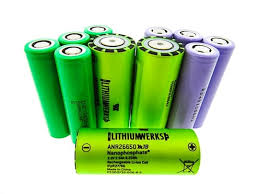
Cylindrical Cells
Prismatic Cells
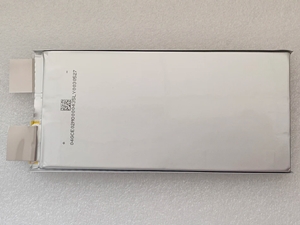
Pouch Cells
Standard 12 month warranty
Extended warranties available

Energy Storage Solutions
iWolf Lithium is an Australian manufacturer of Lithium battery packs built to suit a wide range of high performance energy storage solutions for commercial and domestic applications.
Step away from the myths and unknowns found on social media and forums.
Speak to one or our customer service agents for advice today.
Applications.
- Electric Vehicles, EV Cars, Motorcycles, Scooters, Marine and Drones
- Domestic and commercial power-wall solutions
- Critical backup applications
- Solar Lighting Systems
- Industrial and Mining
- Recreational.
Product Portfolio
Li-Ion and LiFePO4
Typically Li Ion cells have a lifespan of 300 to 500 cycles and LiFePO4 a lifespan of 2000-7000 cycles.
Nationwide Service and Support. Courier services available
Lithium-ion, LiPo, LiFePo4, Sodium-ion, Lithium Titanate,
Lithium Cobalt Oxide (LCO), Lithium Manganese Oxide (LMO), Lithium Iron Phosphate (LFP),
Lithium Polymer (Li-Po) and Lithium Nickel Cobalt Aluminium Oxide
Custom battery packs for High-End applications.
Mobility Scooter batteries, (UPS) Uninterruptable Power Supply battery pack repairs,
Electric Motorcycle batteries, eBike Batteries, EV Car Batteries, eScooter Batteries,
Electric Boats, Electric Forklifts, Electric Unicycle and skateboard batteries,
Home Solar battery system repairs, Laptop Batteries, Batteries for Drones
Robots and Power tool battery pack repairs.
Courier Service, Workshop Guarantees and Extended Warranties are available.
Cell Types
Cylindrical: 14650,18650, 21700, 26650, 32650 and 46800. 2.5Ah to 25Ah
Prismatic: 133mm x 148mm x 28mm. 40Ah and 174mm x 71.7mm x 207mm 32Ah
Pouch: 10mm x 135mm x 210mm. 20Ah
Popular battery rebuilds include;
Zero, Kush, Harley Davidson, Honda, Yamaha.
Fatboy, Bosh, Ampd Bros, Energica.
InMotion, Vaya, Arc, Silence, Surron, EMoS.
Zero, Kaabo, Segway, Ikon, City Coco.
Surron, eRide, iTank, Stark, Savic.
Triumph, Toyota, BMW, Mercedes, Volvo, Fiat.
Super Soco (TS TC and TC Max), Fat Fish, FatFish, Dragon.
Damon, Tesla, Nissan, Kawasaki, Ducati, BMW, Verge.
Prismatic Cells
Prismatic cells are larger than cylindrical cells and therefore allow for larger capacities. Some LifePO4 are as high as 100ah per cell. As a result fewer connections are required making battery packs quicker and easier to build.
Prismatic cells are better suited for energy-intensive applications such as vehicles and medical equipment.
Depending on the application, prismatic cells are usually packed in a series only and are often packed tightly together. This arrangement however does not allow for good air flow between the cells and the heat can pass between the cell’s walls and into the next cell thus creating a need for an active heat management system.
Prismatic cells cost more but the price varies based cell size and the volume.
Prismatic cells are not an off-the-shelf product so acquiring get small quantities is sometimes difficult.
Most manufacturers require a minimum order to make production worthwhile.
Cylindrical Cells
Cylindrical cells require more connections to reach the same capacity and are available in smaller sizes.
Conversely cylindrical cells can offer more power in volts and provide faster discharge rates in per amp hours (Ah).
However while more cylindrical cells would be required to reach the same capacity as prismatic cells, cylindrical cells offer better energy efficiency.
Cylindrical cells can be easily stacked in series and parallel to form a wide variety of shapes and sizes.
Round cells maximise airflow between cells allowing heat to dissipate more quickly and offers more efficient heat management.
Cylindrical cells are cheaper and easier to manufacture, offer better heat management and are less likely to bloat, leak or rupture.
Pouch Cells
The pouch cells radical new design was released in 1995. Conductive foil strips welded to the electrode and sealed in the pouch carry the terminals to the exterior. Pouch cells make the best use of packing space achieving 90% to 95% packing efficiency. They are also weigh significantly less but require some alternative support in the battery compartment.
They are simple, flexible and lightweight but exposure to high temperatures and humidity can shorten service life.
Pouch battery packs are commonly used in the consumer, military and automotive industries.
As with prismatic cells, standardised pouch cells do not exist. Each manufacturer builds cells for a specific application and are commonly Li-polymer.
Some swelling should be expected on charges over time. 10% over 500 cycles is considered normal.
The light casing is perfect for high power applications however due to the lack of casing rigidity these cells are susceptible to swelling as its temperature increases.
This must be taken into account when choosing packs to fit into the battery compartment.
Its energy capacity is often lower than others and the cells are less durable. These cells are also vulnerable to physical damage so battery compartments should be built specifically to prevent these issues.